





















My car licence
Driving is one of the riskiest daily activities that you'll do. Learn how to prepare yourself and your vehicle.
myLs
Get your Learner’s Permit online.Pre learner
Start learning how to be a safe driver now.Learner's permit
Got your Ls? Learn about special L-rules and conditions.P1 provisional licence
You can now drive independently but there are conditions...P2 provisional licence
Keep building your driving skills and experience.Full licence
It's vital to maintain your driving skills and knowledge.Graduated Licensing Scheme
The staged approach to getting your driver’s licence, including new rules for P plates.L and P penalties
The penalties for breaking the rules (Licence Disqualification).The Driver's Handbook
The road rules handbook for all South Australian drivers.The Hazard Perception Test
What to expect in the Hazard Perception Test.Medical fitness to drive
Learn about the fitness to drive requirements in South Australia.Worried about someone's driving?
It can be difficult to know what to do if you have concerns about someone’s driving.Older drivers
Learn about the risks older drivers face and keep safe on the roads.International drivers
Tips for international visitors driving on South Australian roads.Supervising a learner driver
Learn how to develop your child's driving skills.Resources
Resources related to being a safer driver.Stay in touch
Join the conversation.FAQ
Frequently asked questions.My motorcycle licence
Compared to driving other road vehicles, riding a motorcycle places riders at a much higher risk. In a crash, the chances of getting injured are very high.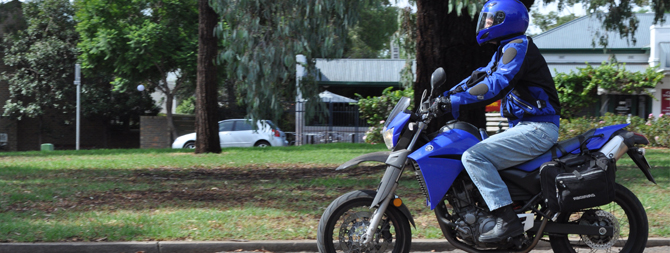
Pre learner
Got your Ls? Learn about special L-rules and conditions.Learner's permit
R-Date endorsement.R-Date class
Licence endorsement.R class
Licence endorsement.Motorcycle helmets
All motor bike riders and any pillion or sidecar passengers must wear an approved motor bike helmet.The Rider's Handbook
The road rules handbook for all South Australian riders.Practice Learner's Theory Test
Study up for the Learner's Theory Test.Rider Safe training
Rider Safe is a compulsory motorcycle rider training course for all novice motorcycle riders.Safer riding tips
You can become a safer rider by having the necessary skills.Motor bike lane filtering
All motor bike riders must know the strict conditions that apply to motor bike lane filtering.Moped riders
Moped/scooter riders, like all motorcyclists, are vulnerable on the road.Returning to riding
Take the time to get your skills up-to-date with the Rider Safe Returning Rider Course.Resources
Resources related to being a safer rider.Motorcycle Rider Hazard Simulator
Practise the Motorcycle Rider Hazard Simulator.Stay in touch
Join the conversation.My heavy vehicle licence
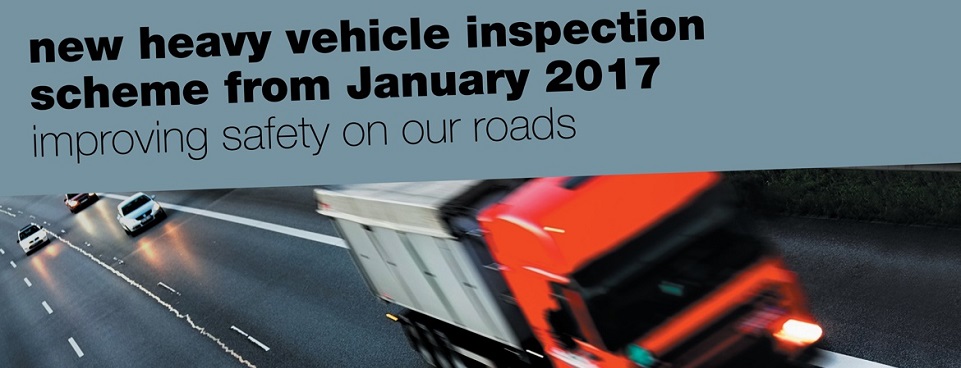
Heavy vehicles include the trucks, road trains and B-doubles that transport goods. It also covers buses, trams, tankers, grain and delivery trucks, livestock transporters, agricultural machinery and other vehicles that are long, and possibly slow-moving. Learn how to upgrade your licence to a higher class.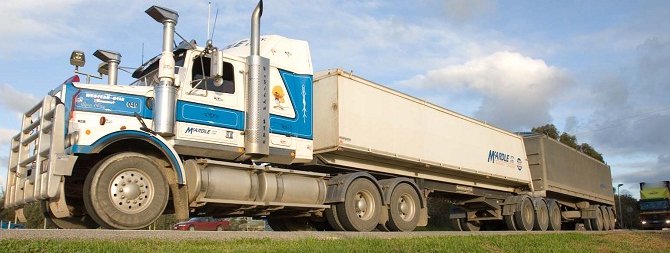
Light Rigid or Medium Rigid
Find out what you need to get your LR or MR class licenceHeavy Rigid or Heavy Combination
Learn how to get your HR or HC class licence.Multi-combination
Find out how to upgrade to an MC class licence.MC licence program
Another way for HR and HC licence holders to get an MC licence if they don't meet the minimum driving experience.Overseas licence holders
See how you can get an MC licence if you have an overseas heavy vehicle licence.Heavy vehicle driver's handbook
This important guide details what you need to know to operate a heavy vehicle safely in South Australia.Operating a heavy vehicle
Explore more about operating heavy vehicles on SA.GOV.AU.Safe driving tips
Heavy vehicles are a safety issue because of the distances travelled, their mass and rigidity.South Eastern Freeway
This freeway's long, steep descent makes it one of the most difficult routes into Adelaide. Watch our video before you drive a heavy vehicle down the South Eastern Freeway.The Driver's Handbook
The Driver's Handbook is the road rules handbook for all South Australian drivers.Road rules
Find out if your knowledge of basic road rules are up to date.Resources
Get more resources to help you be a safer heavy vehicle driver.My ultra high powered vehicle licence
U class licence is a new class of licence that you will need from 1 December 2024 to drive an Ultra High Powered Vehicle (UHPV). A UHPV is a vehicle with a gross vehicle mass not greater than 4.5 tonnes (excluding a bus, motor bike or motor trike) with a power-to-weight ratio equal to or greater than 276 kilowatts per tonne.
Vehicles classified as UHPV
Find out what vehicles are classified as ultra high powered vehicles.Applying for a U class licence
Find out how to get a U class licence.U class licence online training
Anyone who wants to to drive an UHPV (including existing owners or drivers of UHPVs) must take this training to get a U class licence.UHPV offences
It is an offence to drive an UHPV if your automatic vehicle intervention system is disabled.Parents and supervisors
Supervising a learner driver can be challenging, but it can also be very rewarding. You'll help a young person develop the skills and attitudes they need to become a safer, smarter driver.
Pre learner
How to help prepare your learner driver for a lifetime of safe driving.Learner's permit
What you need to know and understand before you supervise a learner driver.Solo driving
Practising solo driving is vital for your learner. Learn tips on practising here.P plater safety
Learn how to reduce road risks for a newly independent driver.Supervising driver tips
Supervising a learner driver is a serious commitment. Help ensure their safety.Reducing crash risks
Read our driving tips for reducing the crash risk of new drivers.Road rules pocket guide
Refresh your knowledge of the road rules before helping a learner driver.Buying a car for new drivers
Learn how to make a safer vehicle choice for their first car.Sharing the household vehicle
As the number of car users in a household increases, there will be a growing pressure to use the available vehicles.The Driver's Handbook
The Driver's Handbook is the road rules handbook for all South Australian drivers.The Driving Companion
The Driving Companion contains the log book to record your learner’s compulsory driving hours.Resources
Resources to help you become a better supervisor.Stay in touch
Join the conversation.Road rules
Is your knowledge of basic road rules up to date? Breaking basic road rules contributes to thousands of avoidable crashes in South Australia that result in injuries and fatalities each year.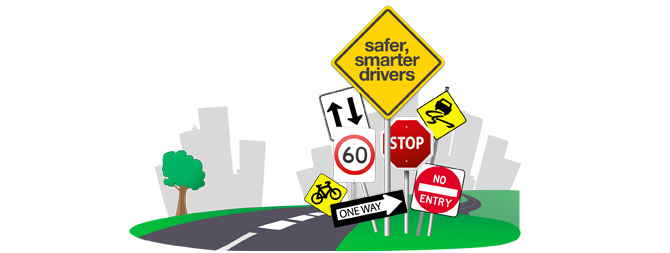
Road rules videos
Watch our videos about several commonly misunderstood road rules. Do you know the rules?Road rules pocket guide
The road rules refresher pocket guide outlines some of the most misunderstood road rules.Road rules quiz
Try this quick road rules refresher quiz to check your road rules knowledge.Trucks and buses low gear signs
Trucks and buses must follow Australian Road Rule 108 when driving down a steep road.Personal mobility devices
Rules for riding a personal mobility device that is propelled with an electric motor.The Driver's Handbook
The Driver's Handbook is the road rules handbook for all SA drivers, including learners.Offences and penalties
Know the legislation on road rules and most driving offences.Road rule amendments
See recent South Australian road rule amendments.25 km/h emergency services speed limit
Drivers must travel at 25 km/h when driving through an emergency service speed zone. This law came into effect in 2014.Stay in touch
Join the conversation.Seatbelts and child restraints
Wearing a seatbelt doubles your chances of surviving a serious crash. Take the time to buckle up.Resources
Find resources about being a safer driver.Rail safety quiz
Think you know how to be safe around trains? Try this quick rail safety quiz to check your knowledge.Cycling laws
When you drive past a cyclists, you must give at least 1 metre of space where the speed limit is 60 km/h or less, or 1.5 metres where the speed limit is over 60 km/h. All cyclists can ride on footpaths.Cyclist road rules and safety
When you ride a bike, you need to know about bells, lights, helmets, riding abreast, bicycle lanes, give-way rules and more. Find rules, laws and safety tips for cycling in South Australia.Safe driving tips
Driving involves risk, so safe drivers aim to reduce their risk.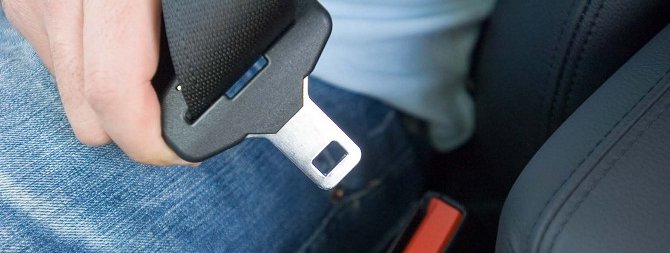
School safety
Learn about road rules and safety tips for driving to and from or near schools.Safer speeds
Speed is a key factor in crashes and road trauma.Alcohol and drugs
Don't mix driving with alcohol or drugs (including medicine).Fatigue
Fatigue is a major factor in causing road crashes.Mobile phones
Using a mobile phone while driving increases the risk of crashing by at least 4 times.Dangerous behaviours
Inattention is an issue in both rural and metropolitan areas.Know when to cross the line
A level crossing is where the road crosses a rail or tram line. Taking risks around trains and trams is very hazardous.Safer vehicles
Buying a car is a big responsibility, whether it's for you or your child.Country driving
Before you drive in the countr, make sure you and your car are prepared.Sharing the road
Know your responsibilities and respect the rights to safety of all who share our roads.Driveway safety
Tragically, one child (often a toddler) is run over in their driveway every week in Australia.Breakdown safety
Slow down and be careful if you see flashing amber hazard lights on the side of the road.Yellow Ribbon Week
South Australia supports Yellow Ribbon "Drive So Others Survive" National Road Safety Week.Move smart
Keep your travel options open, stay flexible and move smart!Passenger distractions
Simple distractions can increase your risk of a crash by up to 4 times.Driving at night
Driving at night is dangerous and requires more skills and concentration.High powered vehicles
Provisional licence holders under 25 years must not drive a high-powered vehicle.Driving age
Getting a driver’s licence isn’t a race. If you don’t need a licence yet, just wait.Practice
Learner drivers who have more supervised practice will reduce their risk substantial crashes.Resources
Resources about being a safer driver.Worried about someone's driving?
It can be difficult to know what to do if you have concerns about someone’s driving.Stay in touch
Join the conversation.Cycling laws
When driving past a cyclist, you must give at least 1 metre of space where the speed limit is 60 km/h or less, or 1.5 metres where the speed limit is over 60 km/h. All cyclists can ride on footpaths.Cyclist road rules and safety
When you ride a bike, you need to know about bells, lights, helmets, riding abreast, bicycle lanes, give-way rules and more. See the rules, laws and safety tips for cycling.Visitors to South Australia
Driving involves risk, so safe drivers aim to reduce their risk.
International drivers
If you are visiting South Australia – welcome! We want you to enjoy your stay but, more importantly, we want you to stay safe. Get tips and rules for driving in South Australia.Licence requirements for visitors
Learn about using an interstate or overseas driver’s licence in South Australia and how to apply for a driver’s licence.The Driver's Handbook
The Driver's Handbook contains the road rules for all drivers in South Australia, including learner drivers.Safer vehicles
Buying a safe car
The safety of vehicles varies considerably. This is why it is important to check the safety rating before you buy – the more stars, the better.
Whether you are buying a new, used or your first car, use our vehicle safety information to help you make the best decision for your needs.

Vehicle safety features have evolved
Let’s re-write the ending
Vehicle safety features and the technologies that can help you avoid a crash are not future technologies, they’re today’s technologies.
Modern vehicles on our roads today are equipped with a range of active safety features, fitted to assist the driver in an emergency whether they are fatigued, unwell, lose concentration or simply make a mistake.
While not designed to replace the driver, technologies such as autonomous emergency braking (AEB) and active lane support systems (LSS) are fitted to a wide range of vehicle makes and models – large, small, luxury, budget-friendly – and can drastically reduce your chances of being seriously injured or worse, killed, on the road.
When we see, hear or read about crashes on our roads, we are quick to judge or shake our heads in disbelief – but we’re all human and we all make mistakes.
Sadly, the result of road crashes are too often negative. With today’s technologies, we can turn that around and re-write the ending.
How safe is your vehicle? Visit ANCAP and check the safety rating before you buy.
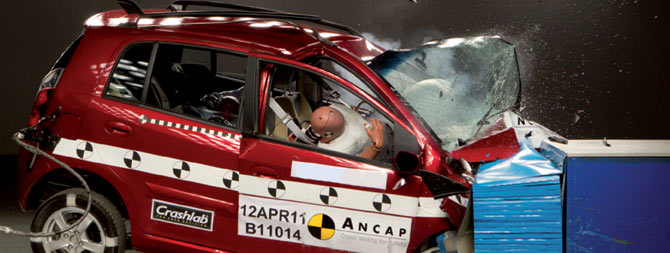
The Australasian New Car Assessment Program (ANCAP) provides independent and transparent advice and information on the level of occupant protection provided by vehicles in serious front and side crashes.
Vehicles are awarded star ratings indicating the level of safety they provided in the event of a crash. The higher the ANCAP star rating, the better the vehicles performed in safety tests.
ANCAP recommends that you only buy 5 star rated vehicles.
With 5 star rated cars available in all categories and price points, it’s not difficult to find a safe car.
The first vehicle to achieve a 5 star ANCAP safety rating was in 2001.
Since then, particularly since 2008, there has been a dramatic increase in the number of cars which have achieved a 5 star rating.
This means that there are now many near-new vehicles that have been awarded the maximum ANCAP safety rating for you to choose from.
Visit the ANCAP website for more information on vehicle safety ratings.
Check the safety rating before you buy a used car
The Used Car Safety Ratings (UCSR) compare used vehicles and provide a crash safety rating. They show how well a used vehicle protects its driver and other road users from death or serious injury in a crash. The UCSR also consider a vehicle’s likelihood of being involved in a crash, based on available crash avoidance technology.
Your choice of car can make all the difference.
Vehicles manufactured in 2023 offer significant safety improvements compared to those from 2001.
The overall risk of death or serious injury for all road users involved in a crash with a 2023 vehicle is 43% lower than with a 2001 vehicle, reflecting advancements in crash compatibility and external safety features.
For the driver of the vehicle itself, the risk of being killed or seriously injured is 31% lower, highlighting improved occupant protection.
These figures demonstrate that modern vehicles not only better protect their occupants but also reduce harm to other road users.
When buying a vehicle, factors like price, colour, seating capacity and make are important. However, safety should be on the top of your list.
How UCSR are developed and rated
Used Car Safety Ratings are developed by the Monash University Accident Research Centre (MUARC). They analyse records from more than nine million vehicles in police-reported road crashes across Australia and New Zealand. Each rating is calculated based on the most recent crash data available.
For the 2025 Used Car Safety Ratings, MUARC analysed 561 vehicle models. They allocated 112 models with a 5-star rating, and awarded 72 of them as ‘Safer Picks’.
A “Safer Pick” designation in the 2025 Used Car Safety Ratings means the vehicle meets the highest safety standards across three areas:
- Outstanding Driver Protection - Provides strong protection for the driver in a crash.
- High Protection for Other Road Users - Designed to minimize harm to other drivers, pedestrians, cyclists, and motorcyclists.
- Advanced Crash Avoidance Technologies - Equipped with key safety features such as:
- Electronic Stability Control (ESC)
- Autonomous Emergency Braking (AEB)
- Lane Keep Assist
- Reversing sensors or cameras
These vehicles combine top crashworthiness with technologies that help prevent crashes, making them the safest choice among used cars.

Download the Used Car Safety Ratings (PDF, 3.1 MB) (PDF, 5.1 MB).
Vulnerable drivers
There are significant differences in the safety of used vehicles. If you are looking to buy a used vehicle listed in the ‘Poor’ or ‘Very poor’ categories (i.e. 1 or 2 stars) you should reconsider. Instead, consider vehicles with an ‘Excellent’ rating (5 stars) or ’Safer Pick’ rating.
Young drivers have a higher-than-average crash risk. It is particularly important that they look at buying one of the best-rated vehicles and, if possible, one of the ‘Safer Picks’.
Statistics also show older people involved in crashes are likely to suffer more serious injuries and take longer to recover. Consider one with the highest driver safety rating within your budget if you are:
- approaching or over 70 years old
- thinking of changing your car.
Safety should not be compromised by price. More than half of the ’Safer Pick’ vehicles are available in the second-hand market for $10,000 or less. This makes safer vehicles affordable in all price ranges.
General tips when buying a used vehicle
- Have the vehicle checked by a qualified independent mechanic.
- Understand your rights and the dealer’s obligations.
Verify that the service booklet is in the vehicle. Review its service history to make sure it has undergone regular and recent servicing.
Also confirm the vehicle handbook is present. It explains controls, maintenance checks, warning lights and service intervals.
Check if a vehicle has been written-off by searching the Personal Property Securities Register (PPSR).
Visit Consumer and Business Services for tips on buying a used car.
Young drivers have a much greater risk of being involved in a crash than more experienced drivers. This is especially true in the first 12 months of solo driving. So, if you are looking to buy your very first car, safety needs to be high on your list of priorities.
Buying your first car
You've been working hard to save money for your first car. But with so many cars on the market, how can you be sure you are getting the best car for your budget?
The My first car safety checklist (PDF, 162.3 KB) has a comprehensive list of safety features. The checklist helps you evaluate the safety of the car you are considering to buy. When choosing a car, try to buy the safest car that is in your budget.
Why safety should be a high priority
As vehicle safety technology develops significantly over time, newer vehicles tend to be safer than older ones. Many safety systems that were once ‘optional extras’ are now standard on many makes, models and variants. New technologies will continue to be mandated on new vehicles.
Research shows that when an Advanced Driver Assistance System (ADAS) is fitted in a vehicle and used correctly, it can reduce road crash risk by 24%. The smart system uses sensors, cameras and other components to:
- warn the driver of danger
- automatically take control to prevent accidents.
If your budget will only extend to a used car that doesn't have an ANCAP safety rating, check out the Used Car Safety Ratings.
Budgeting for your car
Owning a car isn't just about finding and buying a good deal. Don't forget that cars have ongoing costs. Make sure you budget for fuel, maintenance, repairs, registration and insurance.
All vehicles must be registered. In South Australia, this means paying for registration, which includes a Compulsory Third Party (CTP) Insurance. The CTP Insurance Regulator has more information on CTP Insurance.
You can also insure the vehicle with a private insurer for Third Party Property Insurance or Comprehensive Insurance. Insurance premiums can vary, so shop around.
Financing your car
If you are thinking of taking out a loan to buy your car, it is easy to get carried away and spend more than you need to. Keep in mind that interest can add a lot to the total cost of a car. Loans can be financial burden, so be sure of your financial situation and living expenses before taking out a loan.
Consumer guarantees
When buying a car from a licensed vehicle dealer, you are protected by:
- consumer guarantees, which means the new or used car must be of acceptable quality, match the description provided, and be fit for purpose
- statutory warranties for second-hand cars, which means the dealer has a duty to repair defects under warranty.
If something goes wrong and the car doesn't meet these guarantees or warranties, you may be entitled to a repair, replacement or refund. This can depend on the issue.
Visit SA.GOV.AU to learn more about consumer guarantees and warranties.
Visit Consumer and Business services to learn more about:
- buying a used car
- selling cars in South Australia, including statutory warranties.
If you are under 25 years old
Driving restrictions may apply if you are under the age of 25, such as high powered vehicle restrictions for P-platers. Check the laws and conditions that apply to your licence.
Since the invention of the first motor vehicle, better designs and new technologies have influenced the safety, comfort and efficiency of personal travel. Hundreds of innovations have significantly changed the safety of driving. These include everything from car horns (1908) and rearview mirrors (1911) to windscreen washers (1933) and seat belts (1967).
About ANCAP results
ANCAP results can be used to compare how well road users are protected in the most common crash types. Vehicles of different sizes and weights are tested. However, the results only compare vehicles of similar size and mass.
From 2020, ANCAP’s crash tests include a frontal crash with a moving trolley, called the MPDB test. This better represents the risk to smaller and larger vehicles. It also allows ANCAP to assess the risk the vehicle poses to other vehicles when struck. This is known as 'vehicle compatibility'.
See ANCAP's safety ratings for nearly 1,000 vehicle models and which car is safest for you on ANCAP's website.
Safety features to look for
Look for crash avoidance technology and safety features that help protect vehicle occupants in the event of a crash.
Airbags
Most new cars now have front and side driver and passenger airbags as standard. However, these alone are not an adequate safety measure in a serious crash. There are many 2- and 3-star rated vehicles on the road that have airbags, but lack the other features listed here.
Autonomous Emergency Braking (AEB)
AEB is a new safety feature which can either:
- help avoid crashes altogether
- slow the vehicle (at the very least) and lower the risk and severity of a crash.
The technology uses a mixture of radar and/or video cameras to:
- monitor the view ahead of the car
- alert the driver of impending dangers.
If the driver doesn't respond to the alerts, the car applies its brakes independently. Look for AEB when buying your next car.
Crumple zones
Cars are built with crumple zones to protect occupants. Crumple zones absorb the energy generated on impact during a crash. Specially designed crumple zones give way, while maintaining the structural integrity of the cabin. This protects the driver and passengers.
Daytime running lights
Daytime running lights help others to see your car more easily. It also enables you to detect risks and identify hazards on the road.
It is difficult to draw firm conclusions on the link between vehicle safety and vehicle colour. However, studies indicate that lighter-coloured vehicles are involved in slightly less road crashes than darker vehicles. Lighter-colour vehicles provide better visibility to other road users.
Electronic Stability Control (ESC)
For a car to be awarded a 5-star safety rating, it must have Electronic Stability Control (ESC). Different manufacturers have different names for ESC. For example, Dynamic Stability Control (DSC) and Electronic Stabilisation Program (ESP).
ESC is a computer-based system that helps drivers maintain control of their vehicles, especially in adverse conditions such as wet weather. It continuously monitors a vehicle's speed, steering wheel angle, direction of travel and cornering acceleration. It will automatically apply individual brakes if there is a risk of skidding or overturning.
Headrests
These should be fitted to all seats in the car to prevent serious whiplash in a crash.
Whiplash is a leading cause of injury in minor crashes. It can cause significant spinal, neck and head injury in more serious cases.
Lane Support Systems (LSS)
Lane Support Systems (LSS) use cameras to:
- read the lines of the road
- alert the driver if the car is approaching the line.
Some systems will automatically steer the car away from the approached lines to safely maintain the correct course within the lines.
Pedestrian impact
As drivers of cars, we need to remember that vulnerable road users are just as important. For example, pedestrians and cyclists.
There are many safety features and new technologies that help cars become safer for pedestrian impact. These include safe bonnet and bumper bar structures. These are shown in separate pedestrian safety ratings from ANCAP and UCSR.
Also consider features such as:
- brake assistance
- reversing sensors and cameras
- parking sensors
- active bonnets
- collapsible bonnet mounts to provide a crumple zone if a pedestrian hits the bonnet
- different construction materials (such as aluminium rather than steel) to provide a softer, less severe impact.
Reinforced occupant compartment
The cabin of the car is designed like a cell. This makes it difficult for the engine to breach the compartment in a front-on crash. This also ensures that the steering column, dashboard, roof pillars and floor panels are not excessively pushed inwards onto the driver and front-seat passenger. Ideally, all doors can still be opened and closed after a serious crash.
Side impact protection
To protect passengers in side impact crashes, you should get cars that are fitted with side and curtain airbags for all seating positions.
Curtain airbags usually drop from the top of the side window. This creates a cushion between the occupant and the side of the car to protect the head and shoulders. Side airbags often activate from the seat or door panel to protect the torso. Centre console airbags are also becoming more common.
Seat belts
The oldest and still the most effective vehicle safety feature is the seat belt.
Increasingly, car manufacturers are installing three-point lap-sash seatbelts in the middle of the back seat. Single lap belts are not as effective in a serious crash.
Check that the car has a seat belt warning chime to alert the driver when seat belts have not been fastened.
Understanding a car's modern safety features
Many new cars now include Advanced Driver Assistance Systems (ADAS). For example, lane keep assist, autonomous emergency braking and adaptive cruise control. But many drivers don’t know how to use them safely.
Austroads has a website and app to help drivers:
- understand and use ADAS technologies correctly
- get the most from in-car safety features.
The ADAS Assist hub offers videos, easy-to-read fact sheets and plain-language guides. Explore the tools at adasassist.com.au.
Myth: You can take more risks if you have a vehicle with safety features. They will save you in a crash.
Fact: Safety features help to prevent or reduce the severity of a crash, but they don't make you indestructible. Safety features won't necessarily save you from death or serious injury. This is especially true at higher speeds or if you are not wearing your seat belt.
Always stay focused and follow speed limits – no matter what safety systems your vehicle has. The driver is always responsible for controlling the vehicle.

